
You are moving funds from Ethereum to another EVM network before a position expires. A familiar wallet window appears, the swap looks routine, and the quoted amount seems acceptable. Yet this transaction may involve several separate steps: approving a token, interacting with a bridge or routing service, and receiving an asset on a different chain. A wallet can help you inspect some of that activity, but it cannot make every protocol, route, or user decision safe.
That distinction is central to using Rabby Wallet well. A browser wallet is not merely a place to store keys; it is an interface between your intent and smart contracts that may be difficult to inspect directly. Understanding what the wallet can show, what cross-chain execution depends on, and where risk remains lets you make more deliberate decisions—especially when moving funds across networks.
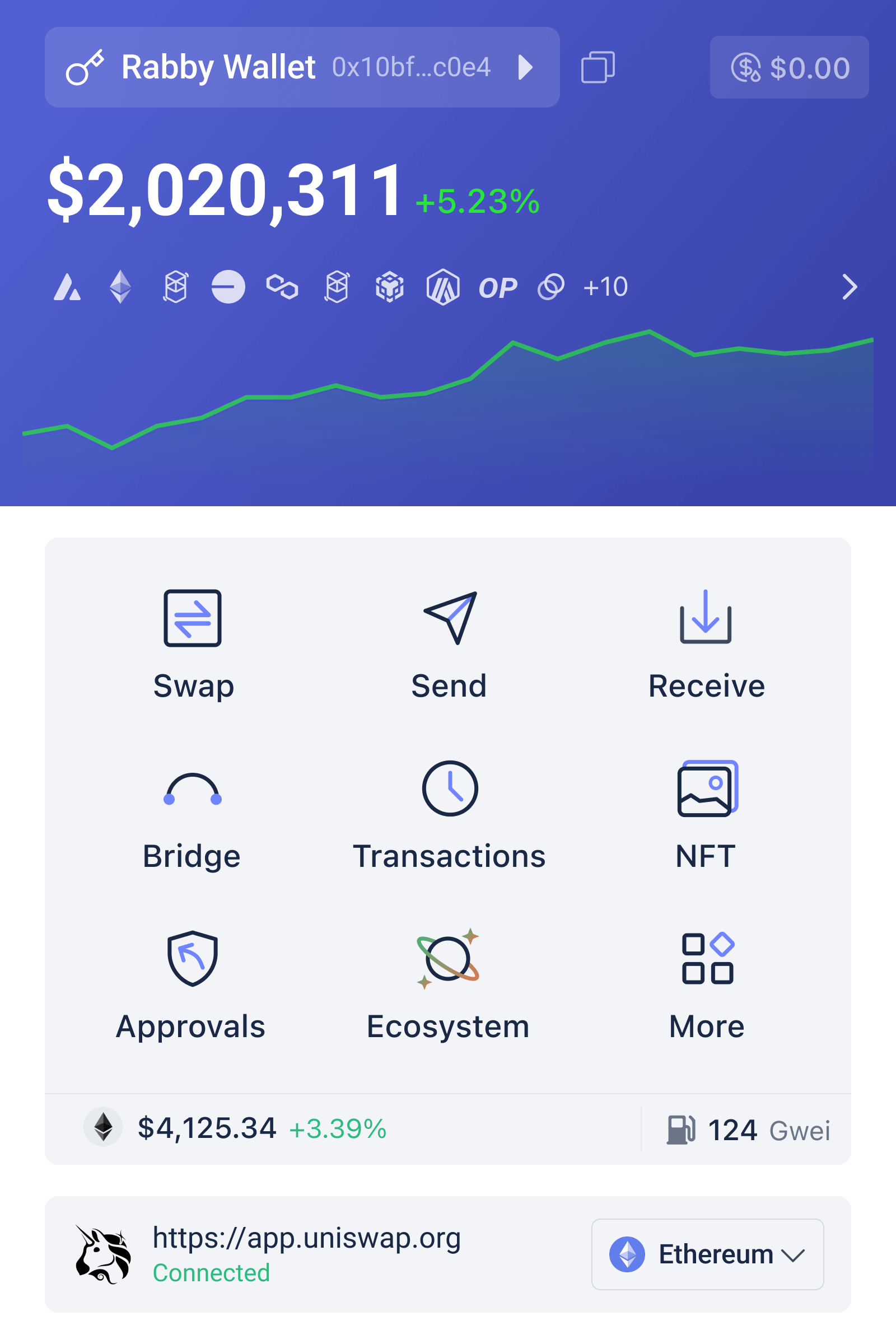
A wallet reduces some risks, not all risks
In a self-custody wallet, the user controls the private keys, while applications request permission to perform actions through signed transactions. This avoids handing a centralized custodian direct control of the assets, but it shifts responsibility: users must protect their recovery credentials, identify suspicious requests, and understand what they are authorizing.
Rabby is presented as a wallet for Ethereum and EVM-compatible chains. EVM chains share a broad smart-contract execution environment, which can make one wallet useful across multiple networks. But a shared execution model does not mean networks share the same security, liquidity, or operational assumptions. Each chain has its own validators or sequencers, applications, tokens, and potential failure modes.
Wallet transaction previews can help expose a request before it is signed. The useful mental model is a checkpoint, not a guarantee. A preview may make the proposed action more legible, but it cannot prove that a contract will behave honestly in every circumstance, that a token is genuine, or that a bridge will complete successfully. Nor does a clear-looking screen eliminate the risk of a compromised website or a misleading interface.
Why a cross-chain swap is more than a swap
A same-chain swap generally exchanges one asset for another through a decentralized exchange or other smart-contract route on one network. A cross-chain swap adds a boundary between networks. Depending on the service and route, it may involve a source-chain transaction, a bridge or messaging mechanism, and a destination-chain transaction. Some systems use liquidity providers to deliver assets on the destination network; others rely on different mechanisms. The exact sequence matters, and it should not be assumed from the word “swap” alone.
That extra coordination creates risks beyond ordinary price movement. A transaction can be confirmed on the source chain while the destination step is delayed, fails, or requires separate action. Fees may be incurred on more than one network. The quoted output can change with market conditions, route availability, or slippage—the difference between the expected and executed exchange rate. A user may also receive a wrapped or bridged representation of an asset rather than the original asset issued on the destination chain.
These are not reasons to avoid every cross-chain route. They are reasons to treat it as a sequence of dependencies. The practical question is not only “How much will I receive?” but also “Which contracts and services must work, what asset will arrive, and what can I do if the route stops partway?”
Use transaction review as a decision process
Before installing any browser wallet, verify that you are using a source you trust. Search results, advertisements, and look-alike pages can lead to malicious downloads. If you are evaluating the rabby extension download, independently confirm the site and extension publisher before proceeding; do not treat a link in an article as proof of authenticity. After installation, protect your recovery phrase and never enter it into a website claiming to validate or synchronize your wallet.
Before signing a DeFi transaction, check the active network, the token and amount being spent, the destination or contract when shown, and the permissions requested. A token approval is not the same as a swap: it grants a contract permission to transfer specified tokens, sometimes up to a large or effectively unlimited amount. Granting broad access may be convenient, but it increases what could be at stake if the approved contract or site is compromised. Where available, use the narrowest approval that fits your needs and review old permissions periodically.
For a cross-chain action, add three checks. First, confirm the destination network and the identity of the asset you expect to receive. Second, compare the quoted output and fees with the value you are moving; a small test transaction can be sensible when using an unfamiliar route, though it still incurs fees and does not prove future transactions are safe. Third, understand whether a pending or failed transfer has a recovery path. Save transaction identifiers and use official support channels rather than sharing secrets with anyone offering to “recover” funds.
The boundary of wallet-level protection
Security is layered. A wallet may help a user inspect a transaction, but safety also depends on the browser and device, the source of the extension, the website being visited, the smart contracts involved, and the chain’s own operation. Compromise at any of these layers can undermine careful behavior elsewhere. A sound habit is to separate what the wallet can help verify from what it cannot: interface and request details may be reviewable; protocol solvency, contract correctness, bridge security, and future market liquidity require separate judgment.
There is also a usability trade-off. More warnings and detailed transaction data can improve scrutiny, but users may become accustomed to approving prompts or may not understand every technical field. No interface can turn complex contract behavior into certainty. When a transaction is unfamiliar, unusually urgent, or difficult to explain in plain language, pausing is a meaningful security action—not a failure to keep up with DeFi.
What to watch as multichain use grows
Rabby’s public positioning as a wallet for Ethereum and EVM chains reflects a practical demand: users want one interface for activity across networks. If multichain workflows continue to expand, the important measure of wallet quality will not simply be the number of supported chains. It will also be whether users can clearly distinguish networks, assets, permissions, and transaction stages. That implication is conditional: broad support is useful only when the associated routes and interfaces remain understandable and the underlying services are dependable.
For US users, the same operational discipline applies whether managing a small test position or a substantial portfolio. Keep recovery material offline, use a trusted device, verify the extension’s provenance, and avoid approving transactions under time pressure. A wallet can make the path from intention to signature easier to inspect; it cannot remove the need to decide whether the action itself is worth the risk.
Frequently asked questions
Does using Rabby make a cross-chain swap safe?
No wallet can guarantee the safety of a cross-chain route. A wallet can provide an interface for reviewing and signing transactions, but the outcome also depends on the contracts, bridge or routing service, network conditions, asset authenticity, and user decisions.
Is a token approval the same as completing a swap?
No. An approval gives a contract permission to transfer a token within the approved scope. A separate transaction may perform the swap. Review the requested permission and the later transaction independently.
What should I check before moving assets to another chain?
Confirm the destination network, the exact asset expected, the quoted output and fees, and what happens if the transfer is delayed or incomplete. For an unfamiliar route, a small test may reduce the amount exposed, but it does not eliminate protocol or market risk.